 Home
HomeEthiopia in the Crosshairs of the United States and the Sudan–UAE Axis
 Marilena Dolce
  17/12/25
  0
0  870
870 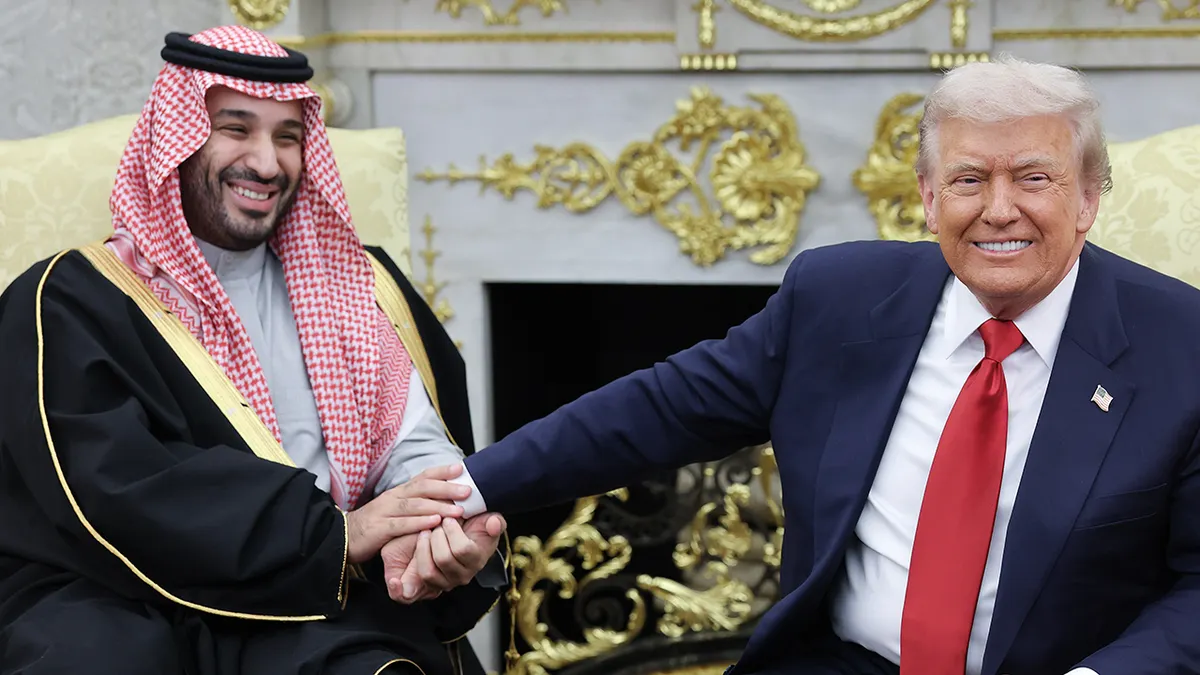
Ethiopia in the Crosshairs of the United States: The African Country Accused of War Crimes and Genocide. How Relations with Sudan and the UAE Are Changing
By Marilena Dolce
affaritaliani.it
Etiopia nel mirino degli Usa: il Paese africano accusato di crimini di guerra e genocidio. Come cambiano i rapporti con Sudan ed Emirati

Unofficial English translation
Ethiopia–United States relations have entered a critical phase after Washington accused Addis Ababa of war crimes and genocide. The accusations intersect with the war in Sudan and Ethiopia’s growing ties with the United Arab Emirates.
The United States and Ethiopia: The End of Political Immunity
According to reports by U.S. media outlets, on December 10, 2025, the United States Congress adopted a resolution (H.Res. 937) accusing the Ethiopian government of war crimes, crimes against humanity, and genocide in the Amhara and Oromia regions. The resolution calls for the application of individual sanctions under the Global Magnitsky Act, which targets individual perpetrators rather than states.
This resolution carries strong political significance. It intervenes in the complex landscape of Ethiopia’s internal conflicts and marks a turning point in Washington’s assessment of Prime Minister Abiy Ahmed’s government since the beginning of his mandate in 2018. Although the resolution does not directly concern Sudan, it is crucial for understanding Ethiopia’s regional role in the Sudanese war.
Washington, however, does not appear intent on isolating Addis Ababa, once a strategic U.S. ally in the Horn of Africa. Yet Ethiopia’s growing closeness to the United Arab Emirates, the worsening of its internal conflicts, and its ambiguous stance in the war that erupted in Sudan in 2023 have made the country an increasingly problematic partner, viewed with growing suspicion.
The War in Sudan and the Role of the RSF
Behind the scenes of Sudan’s tangled crisis—characterized by a multitude of local and regional actors—Ethiopia plays a far from marginal role. The internal conflict between Sudan’s regular army (Sudanese Armed Forces, SAF), loyal to General Abdel Fattah al-Burhan, and the paramilitary militias of the Rapid Support Forces (RSF) represents a humanitarian tragedy of enormous proportions. In two years, the conflict has caused approximately 40,000 deaths and displaced more than 12 million people.
The crisis reached one of its most dramatic moments on October 26, with the bloody RSF assault on El Fasher, the capital of North Darfur.
Mass atrocities, systematic human rights violations, and genocide are among the accusations leveled by humanitarian organizations against the RSF leader, General Mohamed Hamadan Dagalo. The paramilitary militias are allegedly supported militarily, financially, and logistically by the United Arab Emirates. Although Abu Dhabi officially denies this support, it is clearly documented in numerous United Nations reports and investigations by non-governmental organizations.
These documents reconstruct a complex network involving Puntland and Somaliland, the looting of Darfur’s gold, Ethiopian support, Emirati backing, and the recruitment of foreign mercenaries—particularly Colombians—to support the RSF.
In this context, Sudanese sources told Al Jazeera that authorities in Addis Ababa have opened military training camps where foreign mercenaries, especially Colombians, operate. After months of substantial international silence regarding the brutality of the conflict, a turning point now seems to be emerging.
The United States
On November 20, U.S. President Donald Trump, following a meeting at the White House with Saudi Crown Prince Mohammed bin Salman, stated that the United States would commit to stopping the war in Sudan, where “horrible things” are happening.
Subsequently, in a post on Truth, Trump reiterated his intention to intervene in the region: “Arab leaders from around the world, particularly from Saudi Arabia, have asked me to use the power and influence of the presidency to put an end to what is happening in Sudan.” The president added that Washington would work with “Saudi Arabia, the United Arab Emirates, Egypt, and other Middle Eastern partners” to halt the atrocities and stabilize the country.
Trump thus appears to position himself as a mediator between Saudi Arabia, the United Arab Emirates, and Egypt—regional actors aligned on opposing sides of the Sudanese conflict. On one side, the RSF enjoys the support of the UAE and, indirectly, Ethiopia; on the other, the SAF is backed by Egypt and Saudi Arabia.
The U.S. position became clearer on December 3, when the Treasury Department published a statement on X announcing sanctions against four individuals and four entities for their role in the war in Sudan. The post referred to a Colombia-based war network involving individuals and companies engaged in recruiting former soldiers to fight alongside the RSF against the Khartoum government and to train youths and even children.
Ethiopia and the UAE: The Hidden Axis
Beyond foreign mercenaries, the RSF is also allegedly supported by neighboring Ethiopia, which is closely tied to the United Arab Emirates. From its military positions in northwestern Ethiopia, Addis Ababa is said to funnel weapons supplies into Sudan. According to Sudanese sources cited by Al Jazeera, more than 10,000 fighters are reportedly being trained in Ethiopia under the supervision of General Getachew Gudina, while logistical supplies pass through the ports of Berbera in Somaliland and Mombasa in Kenya.
From the outset of the Sudanese conflict, Ethiopia has maintained an ambiguous stance. While officially declaring support for Sudan’s territorial integrity and calling for a ceasefire, in practice Addis Ababa has favored the RSF, which opposes the central government and the regular army. Symbolic of this position was Ethiopia’s 2023 decision to invite the paramilitary militias to the IGAD summit (Intergovernmental Authority on Development), prompting protests and the withdrawal of the official Sudanese delegation.
The paradox is evident: on the one hand, Addis Ababa hosts the headquarters of the African Union, which condemns mercenaries and militias; on the other, those same actors are no longer stigmatized when they fight for a cause supported by Ethiopia. This represents a clear political double standard—mercenaries and militias are condemned only when they do not align with Ethiopian strategic interests.
The shared interests between Ethiopia and the RSF are numerous. Historically, Addis Ababa has been in conflict with Sudan over the al-Fashaga region, a fertile agricultural area in Sudanese territory cultivated by Ethiopian farmers. A fragmented and weakened Sudan would pose less of a threat to Ethiopia. This appears to be the political logic guiding support for the RSF.
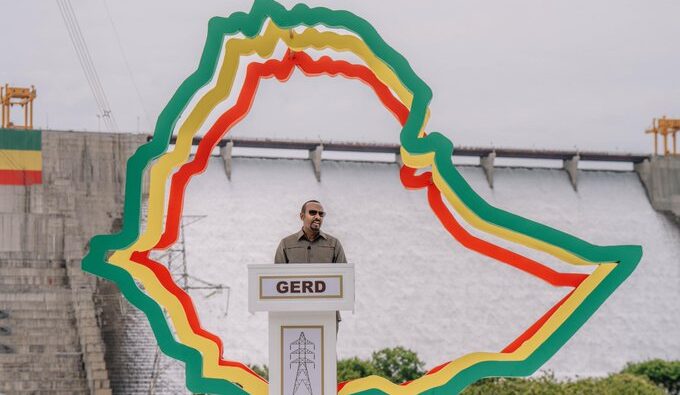
At the core lies the alliance between Ethiopia and the United Arab Emirates, the main regional sponsors of the paramilitary militias. Beyond control of the gold routes from Darfur, in 2023 Addis Ababa signed 17 bilateral agreements with Abu Dhabi in key sectors such as trade, investment, customs, industry, renewable energy, and infrastructure. The UAE has also invested in Ethiopia’s GERD dam and in the agricultural project “Wheat for UAE.”
Ports, the Red Sea, and Regional Competition
Bab el-Mandeb and the Red Sea are central to the geopolitical strategy of the United Arab Emirates, which, through DP World, has invested billions of dollars in port infrastructure across the Horn of Africa. Ports therefore constitute a crucial element of this strategy.
Ethiopia, however, is landlocked and heavily dependent on Djibouti for its trade. This condition has fueled Prime Minister Abiy Ahmed’s persistent campaign to obtain what he defines as “essential” access to the sea. In 2024, Addis Ababa signed an agreement—later suspended and mediated by the UAE—to obtain a port from Somaliland in exchange for official recognition of the territory.
At the same time, Abiy Ahmed and pro-government media have intensified a narrative asserting Ethiopia’s need for a port, justifying it alternately through historical arguments, such as references to Assab, or maritime security concerns. These arguments have been rejected by the coastal countries involved—Somalia, Eritrea, and Djibouti—which have never denied Ethiopia commercial access to ports but firmly defend their territorial and national integrity. In this context, the Ethiopia–UAE agreements have turned the Red Sea into a zone of heightened tension, creating opposing blocs in the region.
During a recent visit to Egypt, Eritrean President Isaias Afwerki stated on state television that the real stake in the war in Sudan is control of the Red Sea, and that it is not merely an internal conflict. “If Sudan, with over 750 kilometers of coastline, collapses, the security of the Red Sea collapses,” President Isaias said, adding that Sudan is being targeted by actors seeking ports and military bases. But the Red Sea, Horn of Africa countries insist, is not for sale.
Abiy Ahmed: Foreign Policy as an Escape from the Internal Crisis
In this scenario, the only truly discordant voice is that of Ethiopian Prime Minister Abiy Ahmed. It cannot be ruled out that behind the alliance with the RSF and the United Arab Emirates lies a strategy of personal political survival. In a country marked by economic crisis, repression, and social fragmentation, external projection and claims of access to the sea become tools of internal legitimacy. A forward flight that risks dragging the entire Horn of Africa into a dangerous spiral of instability.

Condividi su:



Lascia un commento